
When Light Becomes a Language
For most of human history, light has been something we use to see
The 2026 Nobel Prize in Physiology or Medicine reminds us that light can do something much more remarkable: it can become a language for communicating with living cells.
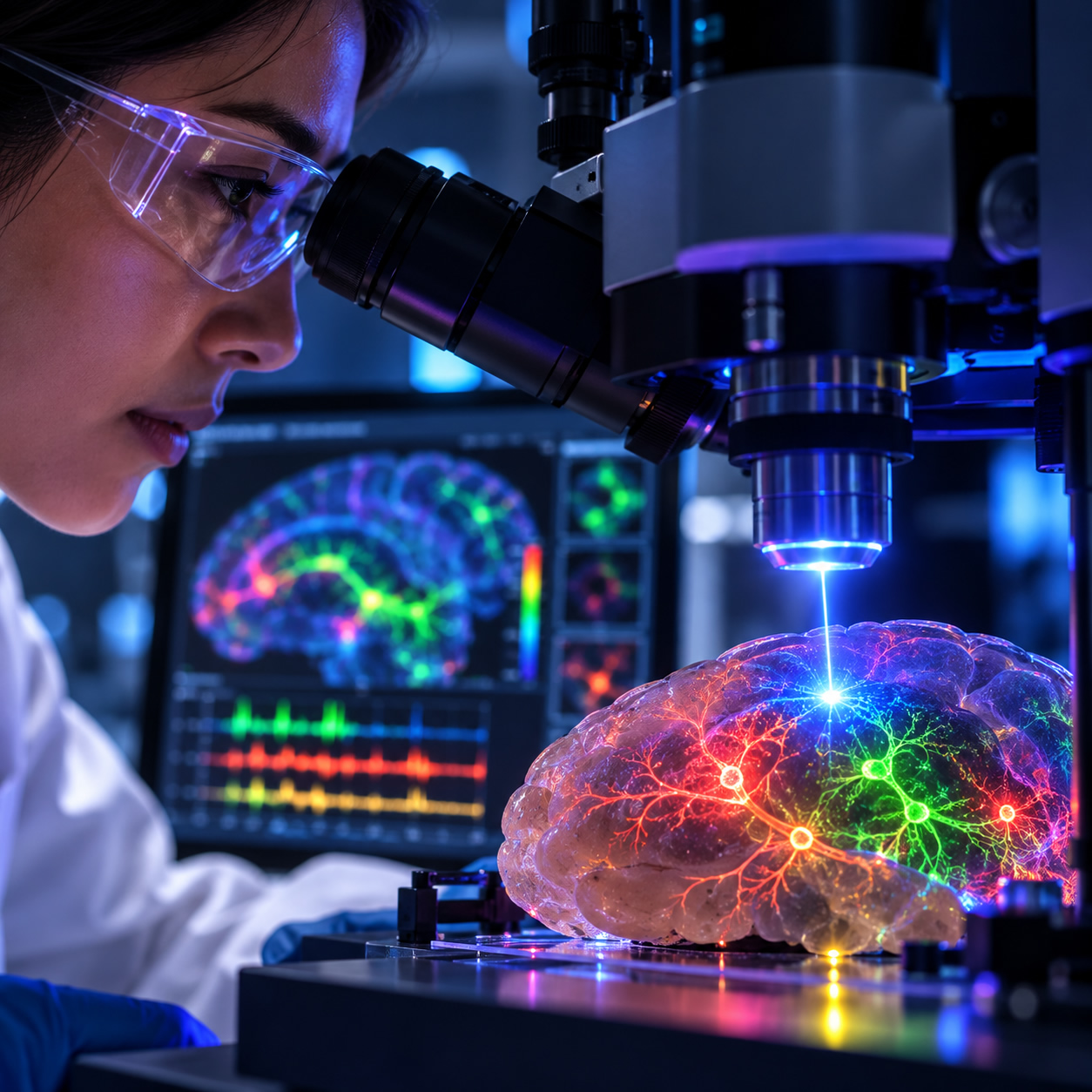
Karl Deisseroth, Peter Hegemann and Georg Nagel were awarded the prize for discoveries that made optogenetics possible — a technology that allows scientists to control individual nerve cells with light. By introducing light-sensitive proteins into neurons, researchers can activate or silence specific cells with extraordinary spatial and temporal precision. Nature
A discovery that began with a simple question about how algae respond to light has therefore evolved into a powerful way of exploring the brain: not simply observing which neurons are active, but switching specific neural circuits on and off and observing what happens. ERC
For URSI, there is something particularly striking about this story.
Radio science has always been about using electromagnetic waves to sense, communicate and interact with the world beyond our immediate perception. Optogenetics extends that idea into one of the most complex systems we know: the living brain.
The signal is light.
The receiver is a molecule.
The circuit is a neuron.
And the experiment is the brain itself.
Perhaps one of the most fascinating frontiers of science is not simply learning how to observe nature — but learning how to communicate with it.
- Mission Statement
- URSI Keydates
- History of URSI
- Statutes of URSI
- Structure
- General Assemblies